An Unanticipated Angel: The Importance of Reaching Out
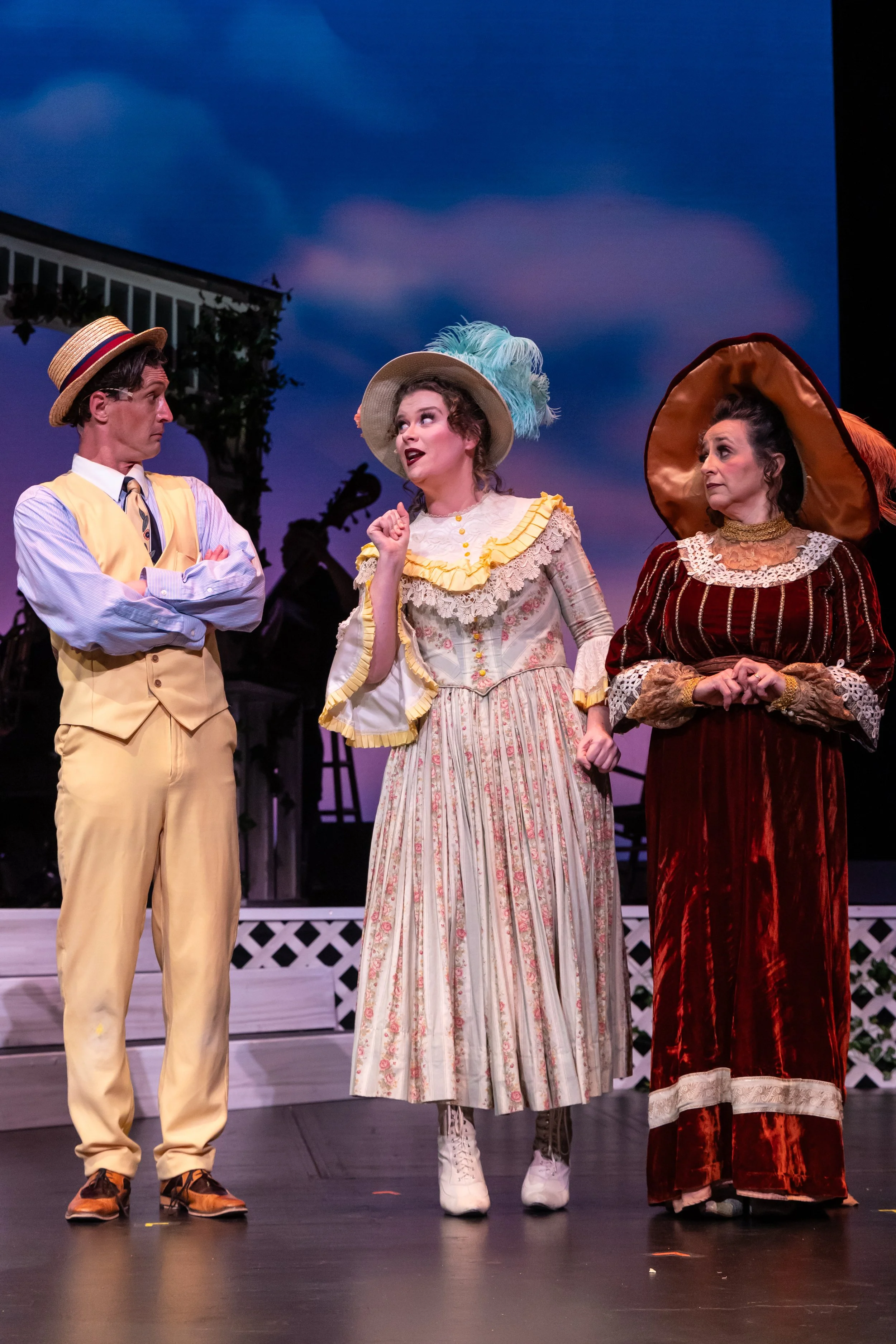
Jeff Parker, Fiona Wohlfarth and Jennifer Burnett in The Music Man. Credit RDG Photography
In today’s blog post, I am going to talk about an unsung hero of my Tourette’s journey— my friend Fiona. Fiona was an instrumental and completely unanticipated angel that got me to my TS diagnosis after over 40 years of not having an answer.
Fiona and I first met during a local production of The Music Man. Fiona and I had spoken a few times, but I wouldn’t have said we were friends, and at the time, neither would she. (Now we for sure are, though.)
About halfway through the production, I had a uniquely bad tic storm in the middle of rehearsal. I could not stop blinking, and it was so painful and embarrassing. One of the worst flare ups I have had with Tourette’s. The side room I excused myself to was unfortunately full of mirrors. I literally could not hide from what was happening to me, and I felt unbearably exposed.
Fiona saw what was happening. I would learn later that she is actually an engineer that works in the neurosurgical space. She recognized my tics (blinking, eyebrow raising, tongue thrusting) and decided to talk with me about them. This was a really brave step in our relationship— we hardly knew each other. She’s been really clear in conversations since then that she would never, ever say something about someone’s tics, but in this case, she just asked a very simple question that made a world of difference— “Are you okay?”
And the truth was that ticcing as badly as I was, completely surrounded by mirrors, on the verge of tears, was that I was not okay! My tics, which at the time had been misdiagnosed as dystonia, specifically blepharospasm, were getting to the point where I was afraid my life as I knew it was over. I wasn’t suicidal or anything close to it, but my tics were making being outside of the home painful, difficult, and embarrassing, not to mention making driving very scary. I was pretty sure my life of performing on the stage was over and that The Music Man was going to be my last ever show.
So when this random acquaintance who I had only had a few conversations with asked me if I was okay, I could only answer with the truth.
“No.”
And I just started telling Fiona all of it. That I had been dealing with this since I was 12 and that it was painful and embarrassing and felt like it was getting worse and worse by the day and that no one was able to give me real answers. I told her about the first neurologist I went to, who looked at my gait, told me it wasn’t dystonia, and that it was just a “bad habit.” It had been an unbearably frustrating time in my life and it all felt like it was coming to a head. And Fiona offered me understanding and compassion that I had not experienced before.
While I was opening up to Fiona, I also realized something about her. She shared with me that she was a biomedical engineer who worked with neurologists, and offered to help me find someone.
Looking back on it, Fiona has since told me that she felt really nervous about offending me or offering me false hope. I can understand that, but sometimes the risk is worth it. The risk just to put yourself out there with someone you barely know to make sure they’re okay can make a world of difference.
Because of our conversation, Fiona was able through her connections in the industry to help me get in with a neurologist who I saw just a few months later. Considering that the waitlist for most neurologists in the area was six months at the very least, this was invaluable.
The power of a simple check in changed my life for the better and gave me back the ability to live my life to the fullest. Even though it was a scary moment for both of us to be so vulnerable with each other, it was one of the most significant moments in my life. When I asked her if she would do it again knowing what she knows now, her answer was a resounding yes. And that’s the clearest way to know what you did was right at the end of the day. The surety that you would do it again.
This post is about the power of a simple conversation— a simple question— and how it irrevocably changed my life for the better. So when in doubt, if someone you know is struggling, check in. Ask how they’re doing. It may be the conversation that helps them finally break through.
Thank you for Facing Tourette’s with me.
